Rebel Racing
- 4.5
- Rating
- 50.00M
- Installs
- Free
- Price

 Analysis by App-foxy
I came to Rebel Racing expecting a quick mobile racer, but I found a game that is better understood as a focused, shortcut-friendly alternative to more demanding racing titles. It is a free racing game from Hutch Games, rated for Everyone, and it has built a large audience with an average score of 4.5 from around 752 thousand ratings and more than 50 million installs. Those figures suggest broad appeal, but they do not answer the more useful question: is its style right for you?
After spending time with it, my answer is fairly clear. I would recommend it to someone who wants licensed-looking road racing, short sessions, and a sense of collecting and improving cars without committing to a full simulation. I would be more cautious with it for anyone who wants deep manual control, realistic driving physics, or a racing game that feels complete without regularly thinking about its progression economy.
How I Decide Whether Rebel Racing Fits
The first decision is about control. This is not the kind of racer I choose when I want to manage every input like a console simulation. Its appeal comes from making races approachable: you can concentrate on timing, positioning, overtaking, and using the right moment to push forward rather than wrestling with a complicated control scheme. That makes it comfortable for short mobile sessions, especially when I am playing with one hand or only have a few minutes.
You May Also Like

 Blood Strike: 2.5 Anniversary
Blood Strike’s Loadouts Turn Every Drop Into a Tactical Gamble
A close look at Blood Strike’s custom loadouts: how fast access to signature weapons reshapes its battle royale rhythm, rewards preparation, and narrows the gap between fights.

 Pandora - Music & Podcasts
Pandora’s Music Is Easy to Start, but Harder to Recover
Pandora’s strength is its low-effort path from a seed to a station. Its weak spot is how much confidence it asks you to place in connection, setup, and quiet recovery.

 8 Ball Pool
 Is Built on Rivalries, Rematches, and Routine
A close look at the rivalries, rematches, shared routines, and unanswered safety questions that turn a quick pool match into a persistent mobile community.

 Samsung Music
’s Quiet Strength Is Playing What You Already Own
Its reach comes less from spectacle than from dependable access to a personal library. That simplicity is both the app’s strongest retention engine and its ceiling.

 AccuWeather: Weather Radar
AccuWeather Review: A Quick, Clear Forecast for Everyday Decisions
For everyday plans, the best forecast is the one you can understand quickly. AccuWeather makes rain timing, radar, and local conditions easy to act on, with a few trade-offs.

 Hill Climb Racing
Why Hill Climb Racing Still Turns Crashes Into One More Run
A tiny car, a bumpy hill and one more upgrade: Hill Climb Racing keeps resurfacing because its simple chaos makes every near-miss feel personal.
More From Our News Desk



The second decision is about pace. The races are built around quick bursts of competition rather than long endurance events. I can start a session, complete a few events, make a useful upgrade or adjustment, and stop without feeling that I have abandoned a forty-minute commitment. For a commute, a break between tasks, or a few minutes before bed, that structure works particularly well.
The third question is how much progression management I enjoy. A racing game can be judged by its driving, but also by what happens between races. Here, the garage and the gradual improvement of cars are important parts of the loop. I am not simply choosing a track and repeating it forever; I am deciding which vehicle deserves attention and whether a stronger car is worth pursuing. That gives the game direction, although it also means progress can feel less immediate once the early excitement settles.
The age rating of Everyone makes it easy to consider for a broad audience, but that does not mean every player will enjoy the same experience. Younger players may like the visual energy and simple entry point, while experienced racing fans may quickly notice the limits of the driving model. Parents should also remember that the game is free to download but includes optional purchases, so device-level purchase controls are sensible if children will play unattended.
The first few races and what they teach you
The opening experience is deliberately easy to understand. I do not need a long tutorial before I can recognize the basic rhythm: enter an event, race through a compact course, earn progress, and return to the garage. That clarity is one of the strongest parts of the design. The game does not ask me to learn a large collection of systems before giving me a reason to care.
What it teaches less directly is the importance of restraint. It is tempting to treat every race as a straight sprint, but good results often come from choosing when to attack rather than holding the accelerator mentally at maximum all the time. I pay attention to corners, traffic, and the moment when an overtake is actually safe. That small shift makes the races feel more deliberate than the simple controls might suggest.
A useful early habit is to avoid spending every reward immediately. I prefer to observe which car is consistently useful across the events I am playing, then direct improvements toward that vehicle instead of spreading resources across a garage full of cars I rarely select. This is one of the game’s less obvious decisions: a broad collection looks satisfying, but a focused garage usually feels more practical when progression becomes slower.
Why the driving feels welcoming
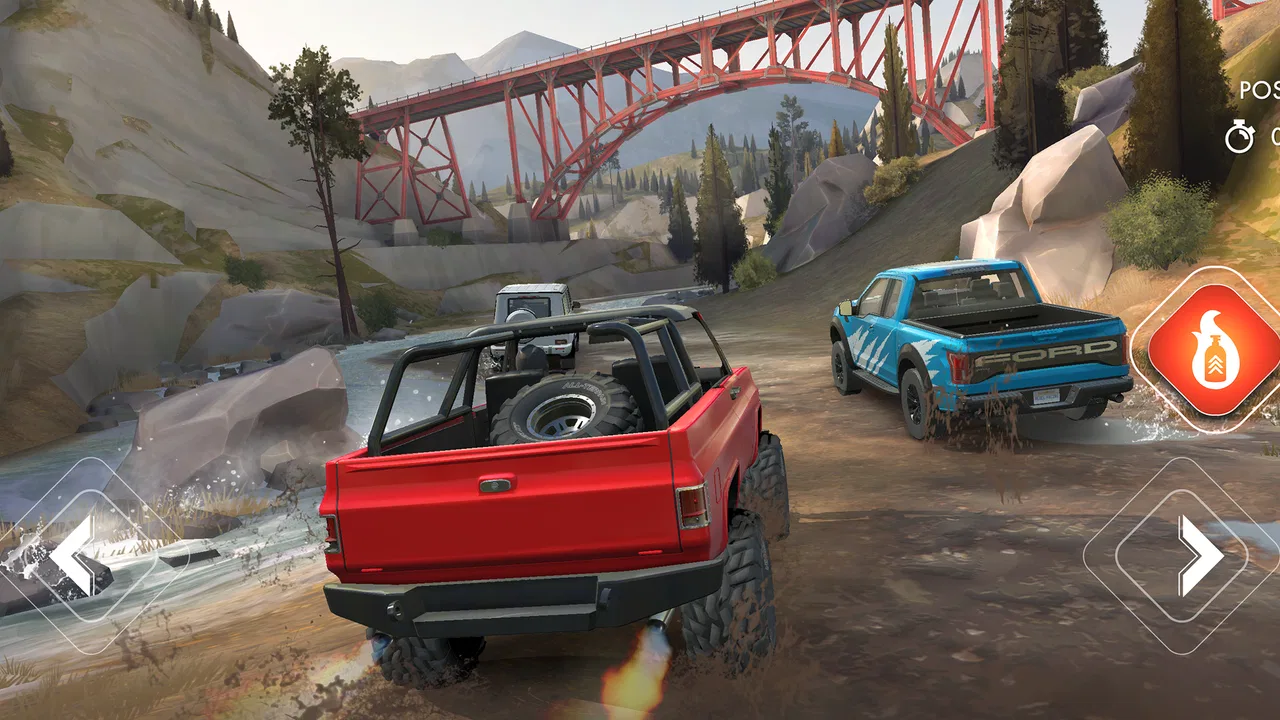
The biggest strength is accessibility. I can pick up the game without having to remember a complicated control layout, and the visual presentation gives each race enough drama to make a short event feel worthwhile. The roads, cars, and close competition create a sense of occasion even when I am only playing for a few minutes.
That accessibility also helps when I am sharing the game with someone who does not normally play racers. A friend can understand the goal almost immediately, and the game does not punish a beginner with the same severity as a dedicated simulation. I would use it as an introduction to mobile racing rather than as a replacement for a steering-wheel-focused experience.
The trade-off is that the simplified approach reduces the room for technical mastery. If you want to experiment with detailed braking points, fine steering corrections, or realistic vehicle behavior, you may eventually feel that the game is guiding you toward a narrower style of play. I enjoy that limitation when I want convenience, but I would not describe it as a complete driving laboratory.
Garage choices matter more than they first appear
The garage is not just a display case. It changes how I think about the next few sessions. Instead of asking only which car looks best, I ask which one fits the event I am trying to clear, which upgrade will make the largest practical difference, and whether I am improving a dependable vehicle or chasing a more exciting but less useful option.
My advice is to use a simple rotation. Keep one car as the reliable choice for normal progress, then use another when a particular event or driving feel makes it worthwhile. This avoids the common mobile-game frustration of constantly switching vehicles without building a clear plan. It also makes losses easier to diagnose: if the dependable car struggles, I can examine my approach rather than wondering whether I have neglected too many vehicles at once.
There is a psychological cost to this system. Car collecting can make every new reward feel important, even when it does not immediately improve your results. I have learned to separate “interesting” from “necessary.” That distinction keeps the progression enjoyable and reduces the urge to spend simply because a new vehicle has appeared.
How I handle short sessions
For everyday use, the game works best when I give each session a small purpose. I might play only enough races to improve one car, test whether a different vehicle handles an event better, or finish a short run before putting the phone away. This is more satisfying than opening the game with no plan and repeating events until the rewards stop feeling meaningful.
One realistic scenario is a ten-minute break during a busy day. I can enter a few races, make one garage decision, and leave with a clear sense of progress. A longer evening session is possible, but the game’s strongest rhythm is still the compact one. If you prefer racing games that reward extended concentration and long championship runs, this structure may feel too fragmented.
I also recommend treating repeated events as practice rather than punishment. When a race goes badly, I try to identify one specific issue: entering a corner too aggressively, attempting an overtake too early, or choosing a car that does not suit the event. That turns repetition into a small experiment. Without that mindset, the loop can become a cycle of retrying for rewards without learning much.
Where it wins against common racing alternatives
Compared with simulation-oriented racing games, this one wins on immediacy. I can begin racing quickly, understand the controls, and enjoy a visually polished contest without first adjusting a large set of driving options. It is the better choice when I want a racing mood rather than a detailed recreation of real-world motorsport technique.
Compared with arcade racers built around constant chaos, it offers a more grounded garage-and-event routine. The cars and courses give the experience a recognizable road-racing identity, while the progression encourages me to think about which vehicle I am developing. I still get quick action, but there is more reason to return than simply chasing the next spectacular moment.
It also suits players who dislike the time commitment of expansive racing games. I do not need to plan a long championship evening to feel that a session mattered. That is a meaningful advantage on a phone, where interruptions are normal and screen time is often divided into small pieces.
The game’s audience size reinforces that accessibility. It has around 26 thousand written reviews alongside its much larger rating count, and the overall average remains 4.5. I would not treat popularity as proof that it is the best racer for everyone, but it does reflect how easily the basic format can connect with a wide range of mobile players.
Where another type of racer may fit better
I would point simulation fans toward a different category if their priority is precise vehicle control. The simplified handling here is useful, but it cannot provide the same satisfaction as a game built around detailed physics, manual inputs, and careful setup. Choosing this title while expecting a simulator would create disappointment rather than appreciation.
I would also suggest looking elsewhere if your main goal is open-world exploration. This experience is organized around races and progression, not the feeling of freely wandering through a large environment. Players who want to discover roads at their own pace may prefer a game designed around exploration instead of compact competitive events.
There is another important distinction for people who want a purely casual toy. The garage and upgrade loop can be rewarding, but it also asks for attention. You will get more from the game if you care about improving a vehicle and planning your next step. If you only want an occasional race with no ongoing decisions, a simpler pick-up-and-play alternative may be more comfortable.
The optional purchase structure is part of that decision. The game is free, while individual in-app purchases range from $0.99 to $99.99. I can enjoy the core experience without treating spending as mandatory, but players who are sensitive to progression pressure should decide in advance whether they will buy anything. Setting a personal rule—such as never purchasing during a frustrating losing streak—helps keep the game on your terms.
What switching to it really costs
The financial entry cost is low because the game is free, but switching still has a time cost. Learning its rhythm is easy; learning how to manage your attention is less so. If you come from a racer where every vehicle behaves dramatically differently, you may need a short adjustment period before the simplified controls feel satisfying rather than limited.
There is also a progression cost when moving from another mobile racer. You may be used to a particular upgrade system, camera view, or control method, and those habits do not automatically transfer. I found it better to approach this game on its own terms instead of trying to force it into the shape of another title. The more I focused on short races and selective garage investment, the more coherent it became.
Device compatibility is broad enough for older supported phones and tablets, since it requires Android 7.0 or later. The current version is 27.01.18975, so I would keep the installation updated where possible for the intended experience. On any mobile game with detailed visuals, I would also close unnecessary background apps if the device feels warm or performance becomes uneven, though that is sensible phone maintenance rather than a special trick.
One practical tip is to decide whether you are playing for competition, collection, or relaxation. Competition makes you focus on race technique. Collection makes new cars and garage decisions more important. Relaxation means accepting that not every event needs to be cleared immediately. Confusing those goals is what makes the progression feel most frustrating; choosing one for a session gives the game a clearer purpose.
Who I would recommend it to
I would recommend it to a player who wants a polished mobile racing experience that starts quickly, works well in short bursts, and combines driving with a manageable garage. It is especially suitable for someone who enjoys improving a favorite car over time but does not want the complexity of a full simulation.
I would also recommend it to casual players who are curious about racing games but feel intimidated by heavy controls. The approachable format gives you room to learn positioning and timing without requiring specialist knowledge. It is a good shared choice when one person enjoys cars and another simply wants an easy game to understand.
I would not make it my first recommendation for a serious racing enthusiast seeking deep realism, nor for someone who dislikes upgrade-driven progression. I would also skip it if optional purchases tend to make you feel pressured, even when spending is not required. In those cases, a premium racer or a simpler arcade game may be a better match, depending on whether you value depth or frictionless play more.
My recommendation after weighing the trade-offs
My final view is positive, with a clear condition: choose it for accessible, event-based mobile racing, not for simulation depth. Hutch Games has shaped the experience around quick decisions, attractive cars, and a garage loop that gives short sessions a reason to continue. The result is easy to recommend when your phone is mainly a place for convenient bursts of entertainment.
I would install it first if I wanted to race during small gaps in the day, build a focused collection, and enjoy a game that does not demand a long tutorial. I would keep my spending boundaries clear, avoid upgrading every vehicle at once, and use each retry to learn one practical lesson. Those habits make the progression feel more controlled.
My strongest recommendation is to treat Rebel Racing as an accessible racing companion, not a definitive driving simulator. With that expectation, its short events, approachable handling, and car-focused progression work together well. If your ideal racer is more technical, exploratory, or completely free of progression decisions, another category will serve you better. For everyone else, this free game is a convincing and easy-to-return-to option.
FAQs for Rebel Racing
01What is the primary objective of Rebel Racing?
Rebel Racing is a thrilling car racing game where players aim to climb the ranks by winning races. The primary objective is to outpace opponents on dynamic tracks, earn rewards, and upgrade your cars to improve performance. The game offers a blend of skillful driving and strategic car customization to stay ahead of the competition.
02How does car customization work in Rebel Racing?
In Rebel Racing, players can customize their cars by upgrading parts like engines, tires, and nitro boosts. Customization allows players to tailor their vehicles to suit their racing style and improve performance. Players can also change the appearance of their cars, making them unique on the track. Upgrades require in-game currency, which can be earned through racing.
03Are there multiplayer options available in Rebel Racing?
Yes, Rebel Racing offers multiplayer options where players can compete against friends or other players globally. This feature enhances the competitive aspect of the game, allowing players to test their skills against real opponents. The multiplayer mode is seamlessly integrated, providing an exciting and unpredictable racing experience.
04What are the system requirements for Rebel Racing on Android and iOS?
Rebel Racing requires a device with at least 1GB of RAM and a stable internet connection. For Android, it typically supports versions 6.0 and up, while iOS requires version 10.0 or later. The game is optimized for performance on a wide range of devices, ensuring smooth gameplay and graphics.
05Is Rebel Racing free to play, and are there any in-app purchases?
Rebel Racing is free to download and play. However, it includes in-app purchases that allow players to buy in-game currency, special cars, and exclusive upgrades. While these purchases can enhance the gaming experience, they are not necessary to progress in the game, making it accessible for all players.
Pros
- Stunning graphics enhance the racing experience.
- Wide range of customizable cars available.
- Smooth and responsive controls.
- Engaging and challenging gameplay.
- Regular updates with new content.
Cons
- In-app purchases can be quite expensive.
- Requires a stable internet connection.
- Can be resource-intensive on older devices.
- Limited offline gameplay options.
- Progression can feel slow without spending.

Rebel Racing
Gallery